Category: Archives

  • Brazil: Microcephaly Case Count Update, Argentine ‘Larvicide Link’ Criticized

    Brazil: Microcephaly Case Count Update, Argentine ‘Larvicide Link’ Criticized

    Today, the Brazilian health ministry released updated numbers on the microcephaly situation in the country; it shows a total of 4,443 suspected and confirmed cases, 3,935 and 50, respectively.
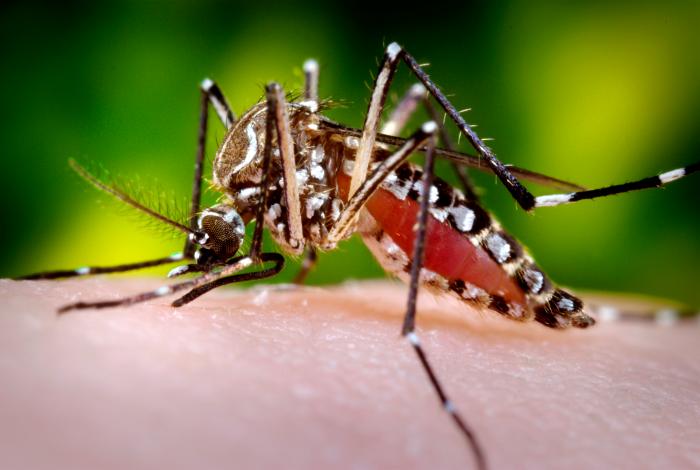
    Only a small number of cases can be attributed to causes other than Zika, according to health officials.

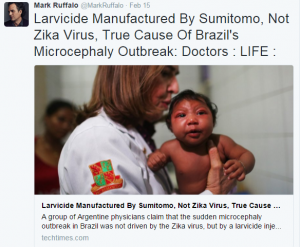
    In related news, a report by the University Network of Environment and Health that attempts to link the larvicide pyriproxyfen and the microcephaly outbreak in Brazil has drawn much criticism from the scientific community; it has been called downright dangerous.

    Actors Mark Ruffalo and George Takei shared stories promoting the idea on their respective social media pages; they are not scientific experts on the issue.

    A number of scientists made statements on the situation.

    Ian Musgrave, with the University of Adelaide: “The claims that pyriproxyfen causes microcephaly are simply not plausible.”

    “Even enormous quantities of pyriproxyfen do not cause the defects seen during the recent Zika outbreak.”
    University of Pittsburgh microbiologist Ernesto Marques, Ph.D., who is studying microcephaly in Brazil, said the larvicide-microcephaly link was false, and reiterated the Brazilian Ministry of Health’s statement that pyriproxyfen has been used for decades with no reports of increased birth defects.

    Grayson Brown, Ph.D., with the public health entomology laboratory at the University of Kentucky in Lexington: “The larva-killing toxin is applied to areas where microcephaly already occurs, because that’s where it’s most important to keep mosquito numbers down. The whole notion is misplaced cause and effect.”

    Japanese company Sumitomo Chemical, the manufacturer of pyriproxyfen, rebuked the linking of its larvicide to microcephaly, pointing out that the World Health Organization has approved this chemical for mosquito control, and that it has been used in France, Denmark, Spain, Turkey, the Dominican Republic and Colombia.

  • Europe Reporting Imported Cutaneous Diphtheria in Refugees

    Europe Reporting Imported Cutaneous Diphtheria in Refugees

    People are fleeing certain African and Middle Eastern countries in large numbers and many are headed to the countries of Europe. In fact, one report notes that about 5,000 people flee Eritrea each month, according to the Office of the United Nations High Commissioner for Refugees (UNHCR), the UN refugee agency.

    One of the things that can come from refugees and asylum seekers are infectious diseases contracted in their home country.

    Europe is currently reporting cases of cutaneous diphtheria in asylum seekers to several countries to include Denmark, Sweden and Germany. To date, nine cases have been reported by the three nations.

    The European Centre for Disease Prevention and Control (ECDC) say Denmark reported a case of toxigenic cutaneous diphtheria in an asylum seeker from Eritrea earlier this month. He presented to health services with a traumatic leg wound received in Libya two months earlier

    At the same time, Sweden reported two confirmed cases of cutaneous diphtheria caused by toxigenic C. diphtheriae in asylum seekers from Eritrea.

    As of 27 July, Germany has reported four cases of cutaneous diphtheria associated with asylum seekers in 2015. All infections were caused by toxigenic C. diphtheriae. One was in a refugee from Libya, one in a refugee from Ethiopia, one in a refugee from Eritrea, and one in a patient from Syria (refugee status unknown).

    In addition, two cutaneous cases caused by C. diphtheriae and associated with asylum seekers or foreign visitors were reported to The European Surveillance System in 2014. The first case was a refugee from Somalia and the second case was a child from Angola who had come to Germany for medical care.

    The information is limited about the vaccination status of these nine cases.

    The ECDC says there is no indication that these cases represent a significant outbreak of diphtheria among refugees in Europe. However, health systems might not be able to detect cutaneous diphtheria outbreaks among refugees because refugees have limited access to health services.

    Cutaneous diphtheria is endemic in tropical countries but is uncommon in Europe. Vaccination is the only effective protection against toxigenic diphtheria and unvaccinated people are at risk of developing potentially life threatening infection with toxigenic C. diphtheriae.

    Most refugees who arrive in Europe are from endemic countries and have travelled under conditions that increase the risk of acquiring cutaneous diphtheria, and many of them continue to be exposed to over-crowding and poor hygiene once they have arrived in the EU. This may increase the risk of diphtheria.

    Related news:

    Spain diphtheria update: 1st case in 30 years dies

    Bulgaria reports human anthrax death in Varna district

    Human and animal Brucellosis reported in Rila town, Bulgaria

    France: Norovirus the cause of ‘Mud Day’ outbreak, 1000 sickened

  • Belgium: Live Polio Virus Solution Accidentally Released Into Local Water

    Belgium: Live Polio Virus Solution Accidentally Released Into Local Water

    UPDATED report 9-26-14: The Netherlands issue shellfish warning following Belgium polio incident

    On Tuesday, September 2, 2014, following a human error, 45 litres of concentrated live polio virus solution were released into the environment by the pharmaceutical company GlaxoSmithKline (GSK) in Rixensart, Belgium. The water from the treatment plant in question is not discharged to the supply network for drinking water, according to a press release (computer translated).

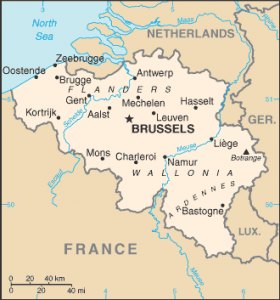
    Belgium map/CIA

    Belgian health authorities, at the request of the Minister of Public Health, took immediate measures when notified of the situation. The Scientific Institute of Public Health and the Supreme Council of Health conducted a risk analysis and confirm there is no public health risk for the general population.

    The risk assessment concludes that dilution of the virus from the junction of the Lasne with the Dyle reduces the risk to negligible. As a precaution, a booster dose of polio vaccine was recommended for persons who had contact with the Lasne river water from 2 September until precautionary measures are lifted.

    Samples of mud and water from the treatment plant and from the Rosieres, Lasne and Dyle areas were taken on Saturday, Sept. 6 to evaluate virus persistence. Testing of these samples was negative: no presence of poliovirus was detected, according to the Federal Public Service (FPS) Health, Food Chain Safety and Environment in Belgium (computer translated).